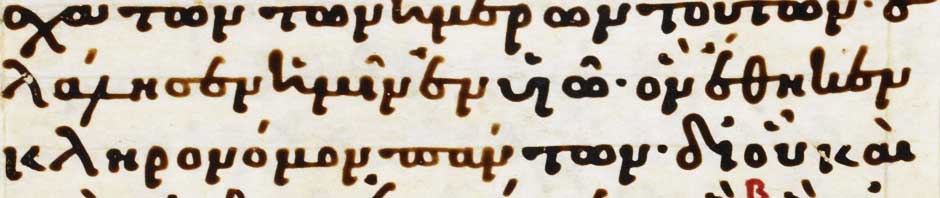
The Greek New Testament did not come to modern readers through one single manuscript. It came through thousands of handwritten witnesses copied across many centuries. These witnesses include papyri, majuscule manuscripts, minuscule manuscripts, lectionaries, quotations in early Christian writers, and ancient translations. Among these, Greek manuscripts remain the most direct witnesses to the wording of the New Testament in its original language.
For beginners in Koine Greek, the world of New Testament manuscripts can feel overwhelming. Manuscripts are identified by names such as Codex Sinaiticus, Codex Vaticanus, and Codex Alexandrinus. They are also identified by numbers such as 𝔓52, 𝔓75, 01, 03, 33, and 1739. Some manuscripts are almost complete Bibles. Others are small fragments containing only a few verses. Some are written on papyrus. Others are written on parchment. Some are written in large capital-style Greek letters, while others use a later cursive script.
This article introduces important Greek New Testament manuscripts in a beginner-friendly way. It is not merely a list of names. It explains what the manuscripts are, why they matter, how they are grouped, and how they help students understand the history of the Greek New Testament text.
Beginner’s Key Idea: A New Testament manuscript is a handwritten witness to part or all of the New Testament text. Textual critics compare these witnesses to understand how the text was copied and to determine the earliest attainable wording.
1. The Main Types of Greek New Testament Manuscripts
Greek New Testament manuscripts are usually divided into four broad categories: papyri, majuscules, minuscules, and lectionaries.
Papyri
Papyri are manuscripts written on papyrus, a writing material made from the papyrus plant. Many papyri are early, often dating from the second to eighth centuries. They are usually fragmentary, but they are extremely valuable because some preserve very early stages of the New Testament text.
Majuscules or Uncials
Majuscule manuscripts are written in large capital-style Greek letters. Older scholarship often calls them uncials. Many famous codices belong to this category, including Codex Sinaiticus, Codex Vaticanus, Codex Alexandrinus, Codex Ephraemi Rescriptus, and Codex Bezae.
Minuscules
Minuscules are written in a later, smaller, cursive-style Greek script. Most surviving Greek New Testament manuscripts are minuscules. They are usually later than the papyri and majuscules, but many preserve important textual traditions.
Lectionaries
Lectionaries are manuscripts arranged for public reading in worship. Instead of presenting biblical books in normal order, they arrange readings according to the church calendar. They are important because they show how the Greek New Testament was read liturgically.
2. Why Manuscripts Matter
Every printed Greek New Testament edition is based on manuscript evidence. Editors do not invent the text. They compare handwritten witnesses. When manuscripts agree, the text is often straightforward. When they differ, editors must evaluate the evidence.
Most differences among manuscripts are minor. Many involve spelling, word order, movable nu, abbreviations, or small particles. Some differences are more significant, such as whether a phrase is present or absent. Textual criticism studies these differences carefully.
Important manuscripts matter because they may be early, complete, carefully copied, textually distinctive, or connected with a significant textual tradition. A tiny fragment may be important because of its early date. A later minuscule may be important because it preserves an older form of text. A lectionary may be important because it shows how passages were read in worship.
3. Important New Testament Papyri
Papyri are among the most exciting witnesses to the Greek New Testament because many are early. They are often fragmentary, but they bring us close to the early centuries of transmission.
𝔓1
Date: Third century
Contents: Matthew 1
Importance: 𝔓1 is one of the early papyrus witnesses to Matthew. Though fragmentary, it is useful for studying the early transmission of the Gospel tradition.
𝔓4
Date: Second or third century
Contents: Luke fragments
Importance: 𝔓4 is significant for the Gospel of Luke and is often discussed alongside early Gospel papyri.
𝔓5
Date: Third century
Contents: John fragments
Importance: 𝔓5 preserves portions of John and contributes to the early evidence for the Fourth Gospel.
𝔓13
Date: Third or fourth century
Contents: Hebrews
Importance: 𝔓13 is an important witness to Hebrews and helps show the early circulation of this text.
𝔓20
Date: Third century
Contents: James
Importance: 𝔓20 is useful for the textual history of the Catholic Epistles.
𝔓22
Date: Third century
Contents: John
Importance: 𝔓22 is another early witness to John and is valuable for studying early Gospel transmission.
𝔓23
Date: Third century
Contents: James
Importance: 𝔓23 is a small but important papyrus witness to James.
𝔓27
Date: Third century
Contents: Romans
Importance: 𝔓27 preserves portions of Romans and is useful for studying early Pauline textual history.
𝔓30
Date: Third century
Contents: 1 Thessalonians and 2 Thessalonians
Importance: 𝔓30 is one of the early papyrus witnesses to Paul’s letters.
𝔓32
Date: Around AD 200
Contents: Titus
Importance: 𝔓32 is important because witnesses to the Pastoral Epistles are less numerous among the earliest papyri.
𝔓37
Date: Third or fourth century
Contents: Matthew
Importance: 𝔓37 contributes to the early textual evidence for Matthew.
𝔓38
Date: Around AD 300
Contents: Acts
Importance: 𝔓38 is important for Acts and often discussed in relation to the Western textual tradition.
𝔓39
Date: Third century
Contents: John
Importance: 𝔓39 is a valuable early witness to John’s Gospel.
𝔓40
Date: Third century
Contents: Romans
Importance: 𝔓40 contributes to the early evidence for Romans.
𝔓45
Date: Third century
Contents: Gospels and Acts
Importance: 𝔓45 is one of the famous Chester Beatty papyri. It is extremely important because it preserves portions of all four Gospels and Acts. Although fragmentary, it shows that collections of Gospel and Acts material circulated in codex form at an early date.
𝔓46
Date: Around AD 200
Contents: Pauline Epistles
Importance: 𝔓46 is one of the most important early witnesses to Paul’s letters. It preserves large portions of the Pauline corpus and is essential for studying the early text of Romans, Corinthians, Galatians, Ephesians, Philippians, Colossians, and related Pauline material.
𝔓47
Date: Third century
Contents: Revelation
Importance: 𝔓47 is one of the most important early witnesses to Revelation. Since Revelation has a complex textual history, this papyrus is especially valuable.
𝔓52
Date: Often dated to the second century
Contents: John 18
Importance: 𝔓52, also known as the Rylands Library Papyrus P52, is famous because it is often regarded as one of the earliest known New Testament fragments. It contains a few lines from John 18. Its size is small, but its historical importance is large because it shows that John’s Gospel was circulating in written form very early.
𝔓53
Date: Third century
Contents: Matthew and Acts
Importance: 𝔓53 contributes evidence for both Gospel and Acts transmission.
𝔓64 and 𝔓67
Date: Second or third century
Contents: Matthew
Importance: These fragments are often discussed together because they may belong to the same manuscript. They are valuable early witnesses to Matthew.
𝔓66
Date: Around AD 200
Contents: John
Importance: 𝔓66 is one of the famous Bodmer papyri. It preserves a large portion of John’s Gospel and is essential for the study of John’s early textual history. It also shows corrections, giving insight into scribal activity.
𝔓72
Date: Third or fourth century
Contents: 1 Peter, 2 Peter, Jude, and other writings
Importance: 𝔓72 is very important for the Catholic Epistles, especially 1 Peter, 2 Peter, and Jude.
𝔓74
Date: Seventh century
Contents: Acts and Catholic Epistles
Importance: Although later than many papyri, 𝔓74 is important because it preserves substantial portions of Acts and the Catholic Epistles.
𝔓75
Date: Late second or early third century
Contents: Luke and John
Importance: 𝔓75 is one of the most important New Testament papyri. It preserves large portions of Luke and John and has a close relationship with the textual tradition represented by Codex Vaticanus. It is crucial for understanding the early Alexandrian text.
𝔓77
Date: Second or third century
Contents: Matthew
Importance: 𝔓77 adds to the early papyrus evidence for Matthew.
𝔓78
Date: Third or fourth century
Contents: Jude
Importance: 𝔓78 is useful for the text of Jude.
𝔓87
Date: Third century
Contents: Philemon
Importance: 𝔓87 is important because Philemon is a short letter and early witnesses are valuable.
𝔓90
Date: Second century
Contents: John
Importance: 𝔓90 is another early witness to John and contributes to the study of the Gospel’s early transmission.
𝔓98
Date: Second century
Contents: Revelation
Importance: 𝔓98 is a very early fragment of Revelation, valuable because early Revelation witnesses are limited.
𝔓100
Date: Third or fourth century
Contents: James
Importance: 𝔓100 is another witness to the Catholic Epistles.
𝔓104
Date: Second century
Contents: Matthew
Importance: 𝔓104 is a very early fragment of Matthew and important for Gospel textual history.
𝔓115
Date: Third or fourth century
Contents: Revelation
Importance: 𝔓115 is one of the important early witnesses to Revelation. It is especially known in discussions of Revelation 13:18 and the number of the beast, where manuscript evidence includes variant readings.
𝔓127
Date: Fifth century
Contents: Acts
Importance: 𝔓127 is a substantial papyrus witness to Acts and contributes to the study of Acts’ textual history.
4. The Great Majuscule Codices
The great majuscule codices are among the most famous witnesses to the Greek Bible. These manuscripts are written on parchment in large Greek letters and often preserve large portions of the Old and New Testaments.
Codex Sinaiticus, 01, א
Date: Fourth century
Material: Parchment
Contents: Large portions of the Greek Old Testament and the complete New Testament, with additional early Christian writings
Importance: Codex Sinaiticus is one of the most important biblical manuscripts in the world. It is one of the earliest complete witnesses to the New Testament. Its text is heavily corrected, which makes it valuable not only for the text itself but also for the history of scribal correction. It is central to modern critical editions and to the study of the Alexandrian textual tradition.
Codex Alexandrinus, 02, A
Date: Fifth century
Material: Parchment
Contents: Most of the Greek Old Testament and New Testament
Importance: Codex Alexandrinus is one of the great biblical codices. It is especially important for Revelation, where its text is highly valued. In the Gospels, its text is often more Byzantine, while in other parts of the New Testament it may preserve different textual qualities.
Codex Vaticanus, 03, B
Date: Fourth century
Material: Parchment
Contents: Most of the Greek Old Testament and New Testament, though with missing portions
Importance: Codex Vaticanus is one of the most important witnesses to the Greek New Testament. It is especially valued for its early Alexandrian text. Westcott and Hort gave it great importance, and it remains central in modern textual criticism.
Codex Ephraemi Rescriptus, 04, C
Date: Fifth century
Material: Parchment palimpsest
Contents: Portions of the Old and New Testaments
Importance: Codex Ephraemi Rescriptus is a palimpsest, meaning the original biblical text was scraped or washed off and overwritten with another text. The underlying biblical text was later recovered. It is one of the great uncial witnesses and is important because it preserves portions from many New Testament books.
Codex Bezae, 05, D
Date: Fifth century
Material: Parchment
Contents: Gospels and Acts, with Greek and Latin facing pages
Importance: Codex Bezae is famous for its distinctive Western text, especially in Acts. It often has longer and unusual readings. It is one of the most fascinating manuscripts because it shows a form of the text that differs noticeably from the Alexandrian and Byzantine traditions.
Codex Claromontanus, 06, Dp
Date: Sixth century
Contents: Pauline Epistles
Importance: Codex Claromontanus is a Greek-Latin manuscript of Paul’s letters. It is especially important for the Western text of Paul.
Codex Laudianus, 08, Ea
Date: Sixth century
Contents: Acts
Importance: Codex Laudianus is a Greek-Latin manuscript of Acts. It is important for Western readings in Acts.
Codex Regius, 019, L
Date: Eighth century
Contents: Gospels
Importance: Codex Regius is an important Gospel manuscript, especially for its non-Byzantine readings in some places.
Codex Washingtonianus, 032, W
Date: Fourth or fifth century
Contents: Gospels
Importance: Codex Washingtonianus is important because it preserves the Gospels and has a mixed textual character. It is also known for the so-called Freer Logion after Mark 16:14.
Codex Koridethi, 038, Θ
Date: Ninth century
Contents: Gospels
Importance: Codex Koridethi is important for the Gospel text, especially in discussions of the Caesarean text-type, though that category is debated.
Codex Zacynthius, 040, Ξ
Date: Sixth century
Contents: Luke
Importance: Codex Zacynthius is a palimpsest and one of the important early witnesses to Luke. It also contains catena commentary material.
Codex Cyprius, 017, K
Date: Ninth century
Contents: Gospels
Importance: Codex Cyprius is a Byzantine Gospel manuscript and useful for understanding the Byzantine tradition.
Codex Sangallensis, 037, Δ
Date: Ninth century
Contents: Gospels
Importance: Codex Sangallensis is a Greek-Latin manuscript and valuable for Gospel textual study.
Codex Augiensis, 010, Fp
Date: Ninth century
Contents: Pauline Epistles
Importance: Codex Augiensis is a Greek-Latin witness to Paul and belongs to the Western tradition in the Pauline Epistles.
Codex Boernerianus, 012, Gp
Date: Ninth century
Contents: Pauline Epistles
Importance: Codex Boernerianus is closely related to Codex Augiensis and important for the Western text of Paul.
5. Other Important Majuscule Manuscripts
Beyond the most famous codices, many majuscule manuscripts are important for particular books, passages, or textual traditions.
| Manuscript | Siglum | Main Contents | Why It Matters |
|---|---|---|---|
| Codex Basilensis | 07, E | Gospels | Important Byzantine Gospel witness |
| Codex Seidelianus I | 011, H | Gospels | Valuable for Gospel textual comparison |
| Codex Seidelianus II | 013, H | Gospels | Another Gospel majuscule witness |
| Codex Mutinensis | 014, Ha | Acts and Catholic Epistles | Useful for non-Gospel textual history |
| Codex Coislinianus | 015, Hp | Pauline Epistles | Important fragmentary Pauline witness |
| Codex Freerianus | 016, I | Pauline Epistles | Fragmentary but valuable for Paul |
| Codex Mosquensis I | 018, Kap | Acts, Catholic Epistles, Paul | Important Byzantine witness outside the Gospels |
| Codex Angelicus | 020, Lap | Acts, Catholic Epistles, Paul | Important for later majuscule tradition |
| Codex Campianus | 021, M | Gospels | Gospel witness often cited in apparatuses |
| Codex Petropolitanus Purpureus | 022, N | Gospels | Purple parchment manuscript, visually and textually important |
| Codex Sinopensis | 023, O | Matthew | Purple manuscript with Gospel text |
| Codex Guelferbytanus A | 024, P | Gospels | Palimpsest Gospel witness |
| Codex Porphyrianus | 025, Papr | Acts, Catholic Epistles, Paul, Revelation | Important because it covers many non-Gospel books |
| Codex Nitriensis | 027, R | Luke | Palimpsest witness to Luke |
| Codex Guelferbytanus B | 026, Q | Gospels | Another palimpsest Gospel witness |
| Codex Rossanensis | 042, Σ | Matthew and Mark | Purple Gospel codex with illustrations |
| Codex Beratinus | 043, Φ | Matthew and Mark | Purple parchment Gospel witness |
6. Important Minuscule Manuscripts
Minuscule manuscripts are usually later than papyri and majuscules, but they are extremely numerous and important. Some preserve older textual traditions. Others are important because of their relationship to textual families.
Minuscule 1
Date: Twelfth century
Contents: New Testament portions
Importance: Minuscule 1 is important because it belongs to Family 1, a group of Gospel manuscripts with distinctive readings.
Minuscule 13
Date: Thirteenth century
Contents: Gospels
Importance: Minuscule 13 is associated with Family 13, also called the Ferrar Group. This group is famous for placing the story of the adulterous woman after Luke 21:38 in some witnesses.
Minuscule 33
Date: Ninth century
Contents: Most of the New Testament except Revelation
Importance: Minuscule 33 has often been called “the Queen of the Cursives” because of its high textual value. Though a minuscule, it preserves a text often aligned with important early witnesses.
Minuscule 69
Date: Fifteenth century
Contents: New Testament
Importance: Minuscule 69 is part of Family 13 and important for studying that textual group.
Minuscule 81
Date: AD 1044
Contents: Acts
Importance: Minuscule 81 is one of the most important minuscule witnesses to Acts and often agrees with early Alexandrian witnesses.
Minuscule 104
Date: Eleventh century
Contents: Gospels
Importance: Minuscule 104 is associated with Family 1 and is important for Gospel textual groupings.
Minuscule 157
Date: Twelfth century
Contents: Gospels
Importance: Minuscule 157 is often cited in textual apparatuses and is valuable for Gospel studies.
Minuscule 1739
Date: Tenth century
Contents: Acts, Catholic Epistles, Pauline Epistles
Importance: Minuscule 1739 is one of the most important minuscules. It appears to preserve an ancient textual tradition and is especially valuable in Acts and the Epistles.
Minuscule 1881
Date: Fourteenth century
Contents: Pauline Epistles
Importance: Minuscule 1881 is important for the Pauline Epistles and is often cited in critical studies.
Minuscule 2053
Date: Thirteenth century
Contents: Revelation
Importance: Revelation has a distinct manuscript tradition, and 2053 is one of the notable witnesses.
Minuscule 2329
Date: Tenth century
Contents: Paul
Importance: Minuscule 2329 is valuable in Pauline textual studies and is often grouped with important witnesses.
Minuscule 2427
Date: Once thought ancient, now known to be modern
Contents: Mark
Importance: Minuscule 2427 is important as a cautionary example. It was once thought to be an important early-style witness, but later analysis showed it to be a modern production. It reminds students that manuscript study also involves material analysis, ink, parchment, provenance, and scientific testing.
7. Manuscript Families and Groups
Some manuscripts are important not only individually but also because they belong to textual families. A textual family is a group of manuscripts that share distinctive readings and likely have some historical relationship.
Family 1
Family 1 includes manuscripts such as 1, 118, 131, and 209. It is important in Gospel textual criticism. These manuscripts preserve distinctive readings and are often discussed in relation to the so-called Caesarean text, though the classification remains debated.
Family 13
Family 13, also known as the Ferrar Group, includes manuscripts such as 13, 69, 124, 346, 543, 788, 826, 828, 983, and others. It is famous for distinctive Gospel readings, including the relocation of the pericope adulterae in some witnesses.
The Byzantine Tradition
The Byzantine tradition is represented by the majority of later Greek manuscripts. It became the dominant form of the Greek New Testament text in the medieval Greek-speaking church. It is important for understanding the Textus Receptus, Majority Text editions, and the history of liturgical copying.
The Alexandrian Tradition
The Alexandrian tradition is associated with manuscripts such as Codex Vaticanus, Codex Sinaiticus, 𝔓75, and other early witnesses. It is often characterized by shorter and more difficult readings, though such descriptions must be used carefully.
The Western Tradition
The Western tradition is especially important in Acts and is associated with manuscripts such as Codex Bezae and some Old Latin witnesses. It often has paraphrastic or expanded readings.
8. Important Manuscripts by New Testament Section
The Gospels
Important Gospel manuscripts include 𝔓45, 𝔓52, 𝔓66, 𝔓75, Codex Sinaiticus, Codex Vaticanus, Codex Alexandrinus, Codex Bezae, Codex Washingtonianus, Codex Koridethi, Family 1, Family 13, and Minuscule 33.
Acts
Important Acts manuscripts include 𝔓45, 𝔓38, 𝔓74, 𝔓127, Codex Sinaiticus, Codex Vaticanus, Codex Bezae, Codex Laudianus, Minuscule 81, and Minuscule 1739.
Pauline Epistles
Important Pauline manuscripts include 𝔓46, 𝔓30, 𝔓32, 𝔓87, Codex Sinaiticus, Codex Vaticanus, Codex Alexandrinus, Codex Claromontanus, Codex Augiensis, Codex Boernerianus, Minuscule 33, Minuscule 1739, Minuscule 1881, and Minuscule 2329.
Catholic Epistles
Important Catholic Epistles manuscripts include 𝔓20, 𝔓23, 𝔓72, 𝔓74, 𝔓78, 𝔓100, Codex Sinaiticus, Codex Vaticanus, Codex Alexandrinus, Codex Ephraemi Rescriptus, Minuscule 33, and Minuscule 1739.
Revelation
Important Revelation manuscripts include 𝔓47, 𝔓98, 𝔓115, Codex Sinaiticus, Codex Alexandrinus, Codex Ephraemi Rescriptus, Codex Porphyrianus, Minuscule 2053, and other specialized Revelation witnesses.
9. Beginner’s Catalogue of Important Greek New Testament Manuscripts
| Manuscript | Category | Approximate Date | Main Importance |
|---|---|---|---|
| 𝔓1 | Papyrus | Third century | Early Matthew witness |
| 𝔓4 | Papyrus | Second or third century | Early Luke witness |
| 𝔓45 | Papyrus | Third century | Gospels and Acts, Chester Beatty papyrus |
| 𝔓46 | Papyrus | Around AD 200 | Major early Pauline witness |
| 𝔓47 | Papyrus | Third century | Early Revelation witness |
| 𝔓52 | Papyrus | Second century | Famous early John fragment |
| 𝔓66 | Papyrus | Around AD 200 | Major early John witness |
| 𝔓72 | Papyrus | Third or fourth century | Important for Peter and Jude |
| 𝔓75 | Papyrus | Late second or early third century | Major Luke and John witness |
| 𝔓115 | Papyrus | Third or fourth century | Important Revelation witness |
| Codex Sinaiticus | Majuscule | Fourth century | Complete New Testament, major critical witness |
| Codex Vaticanus | Majuscule | Fourth century | One of the most important Alexandrian witnesses |
| Codex Alexandrinus | Majuscule | Fifth century | Major biblical codex, important for Revelation |
| Codex Bezae | Majuscule | Fifth century | Distinctive Western text of Gospels and Acts |
| Codex Claromontanus | Majuscule | Sixth century | Important Greek-Latin Pauline witness |
| Codex Washingtonianus | Majuscule | Fourth or fifth century | Important mixed Gospel text |
| Codex Koridethi | Majuscule | Ninth century | Important Gospel witness |
| Minuscule 33 | Minuscule | Ninth century | High-value minuscule, “Queen of the Cursives” |
| Minuscule 81 | Minuscule | Eleventh century | Important Acts witness |
| Minuscule 1739 | Minuscule | Tenth century | Preserves ancient textual tradition |
10. Why Small Fragments Can Be Important
A beginner may wonder why scholars care about tiny fragments. Why should a few words from John or Matthew matter? The answer is that early fragments provide historical anchors. Even if a fragment preserves only a few verses, it proves that the text existed in that form at a particular time and place.
For example, a small early fragment of John helps show that the Gospel was circulating in Egypt by an early period. A fragment of Revelation helps because Revelation’s manuscript tradition is thinner than that of the Gospels. A fragment of Paul helps scholars examine the early shape of the Pauline collection.
Fragments also remind us that ancient books were physical objects. They could be damaged, reused, discarded, buried, or preserved by dry climate. The survival of a manuscript is not the same as the original distribution of the text. Many manuscripts disappeared because of climate, war, decay, reuse, or simple wear.
11. Why Complete Codices Are Important
Complete or nearly complete codices are important because they show how books were collected. Codex Sinaiticus and Codex Vaticanus are not merely witnesses to individual verses. They show the Bible as a large book object. They help us understand canon, book order, scribal habits, correction, punctuation, and the physical format of Christian Scripture.
A codex is different from a scroll. Early Christians adopted the codex format widely. This allowed multiple books to be bound together. The codex form helped shape how readers encountered the New Testament as a collection rather than as isolated writings.
12. Nomina Sacra in Manuscripts
One of the most fascinating features of early Christian manuscripts is the use of nomina sacra, or “sacred names.” Words such as God, Lord, Jesus, Christ, Spirit, Son, Father, and sometimes others were abbreviated in special ways with a line over the letters. For example, the Greek word for God, θεός, may appear in abbreviated form.
Nomina sacra show that Christian scribes developed distinctive copying conventions. These abbreviations were not random. They reflect reverence, scribal habit, and Christian identity. They also help scholars identify Christian manuscripts.
13. Corrections in Manuscripts
Many manuscripts contain corrections. A correction may come from the original scribe or from a later hand. Corrections can show that scribes checked their work against another exemplar. They can also show that a manuscript remained in use over time.
Codex Sinaiticus is especially famous for its corrections. These corrections make the manuscript more complicated but also more valuable. They allow scholars to study layers of textual history within one physical object.
14. Palimpsests
A palimpsest is a manuscript whose original writing was erased or scraped off so the material could be reused. Parchment was expensive, so reuse was practical. Some important New Testament manuscripts are palimpsests, including Codex Ephraemi Rescriptus and Codex Zacynthius.
Modern imaging technology has made palimpsests more readable. Text that was once difficult or impossible to see can now be recovered through advanced photography and digital processing. This shows that manuscript study continues to develop.
15. Purple Codices
Some manuscripts were written on purple-dyed parchment, sometimes with silver or gold ink. These manuscripts were luxury objects. Examples include Codex Petropolitanus Purpureus, Codex Sinopensis, Codex Rossanensis, and Codex Beratinus.
Purple codices matter not only for textual criticism but also for the history of Christian book culture. They show that some biblical manuscripts were produced with great expense and artistic care.
16. Greek-Latin Manuscripts
Several important manuscripts present Greek and Latin text together. Codex Bezae, Codex Claromontanus, Codex Laudianus, Codex Augiensis, and Codex Boernerianus are examples. These manuscripts are important because they show interaction between Greek and Latin textual traditions.
Greek-Latin manuscripts are especially useful for studying the Western text. They also show that bilingual Christian communities valued both Greek and Latin forms of Scripture.
17. Manuscripts and the Textus Receptus
The Textus Receptus was based on a limited number of later manuscripts compared with the evidence available today. This does not make it historically unimportant. It was extremely influential in the history of printed Greek New Testaments and early Protestant translations.
However, modern critical editions use a much wider range of manuscript evidence. This includes early papyri, great majuscule codices, important minuscules, lectionaries, ancient versions, and patristic citations. The difference between the Textus Receptus and modern critical editions is partly a difference in available evidence and method.
18. Manuscripts and Modern Critical Editions
Modern critical editions such as Nestle-Aland and the Editio Critica Maior depend on manuscript evidence. Editors compare readings and evaluate external and internal evidence. External evidence includes date, geographical distribution, manuscript quality, and textual relationships. Internal evidence asks which reading best explains the origin of the others and which reading best fits the author’s style and context.
No single manuscript is followed automatically in every place. Even highly valued manuscripts such as Codex Vaticanus and Codex Sinaiticus are not treated as infallible. Editors weigh evidence case by case.
19. How Beginners Should Use Manuscript Information
Beginners should not try to memorize every manuscript immediately. Instead, begin with the most important names and categories. Learn the difference between papyri, majuscules, minuscules, and lectionaries. Then learn a few major witnesses: 𝔓52, 𝔓45, 𝔓46, 𝔓66, 𝔓75, Codex Sinaiticus, Codex Vaticanus, Codex Alexandrinus, Codex Bezae, Minuscule 33, and Minuscule 1739.
After that, study manuscripts in connection with real passages. For example, when reading John, notice 𝔓66 and 𝔓75. When reading Paul, notice 𝔓46. When reading Acts, notice Codex Bezae and Minuscule 81. When reading Revelation, notice 𝔓47, 𝔓115, and Codex Alexandrinus.
20. A Simple Memory Guide
Remember 𝔓52
The tiny but famous early fragment of John.
Remember 𝔓46
The major early witness to Paul’s letters.
Remember 𝔓75
The major early witness to Luke and John, close to Vaticanus.
Remember א and B
Sinaiticus and Vaticanus, two great fourth-century codices.
21. Important Manuscripts in One Paragraph
The most important Greek New Testament manuscripts include early papyri such as 𝔓45, 𝔓46, 𝔓47, 𝔓52, 𝔓66, 𝔓72, 𝔓75, and 𝔓115; great majuscule codices such as Codex Sinaiticus, Codex Vaticanus, Codex Alexandrinus, Codex Ephraemi Rescriptus, and Codex Bezae; specialized majuscule witnesses such as Codex Claromontanus, Codex Laudianus, Codex Washingtonianus, Codex Koridethi, Codex Zacynthius, and Codex Porphyrianus; and valuable minuscules such as 1, 13, 33, 69, 81, 1739, 1881, 2053, and 2329. Together these manuscripts help scholars trace the history of the New Testament text from the early centuries through the medieval period.
22. The Living Value of Manuscript Study
Manuscript study is not a dry academic hobby. It helps readers understand how the Greek New Testament was copied, preserved, read, corrected, and transmitted. It also teaches humility. No modern reader holds the original autograph of Matthew, John, Romans, or Revelation. What we have is a rich manuscript tradition. That tradition must be studied carefully.
For the Koine Greek student, manuscripts remind us that the New Testament was a real ancient text written, copied, and read in real communities. The words on a modern printed page are connected to papyrus fragments, parchment codices, scribal corrections, lectionary readings, and centuries of preservation.
The goal is not to overwhelm the beginner with manuscript numbers. The goal is to help the student see that the Greek New Testament has a deep and well-studied history. Every serious reader of the Greek New Testament benefits from knowing at least the major witnesses.
A Clear Path Forward for Beginners
Start with the categories. Then learn the famous papyri. Then learn the great codices. Then learn a few important minuscules and manuscript families. Finally, connect manuscript evidence to real Greek passages. This approach keeps the subject from becoming a confusing list of numbers.
The most important thing is to keep reading Greek. Manuscripts matter because they preserve the Greek words. The more Greek you learn, the more meaningful manuscript study becomes. At first, manuscript names may feel like museum labels. Later, they become witnesses in a living conversation about the wording, history, and transmission of the New Testament.