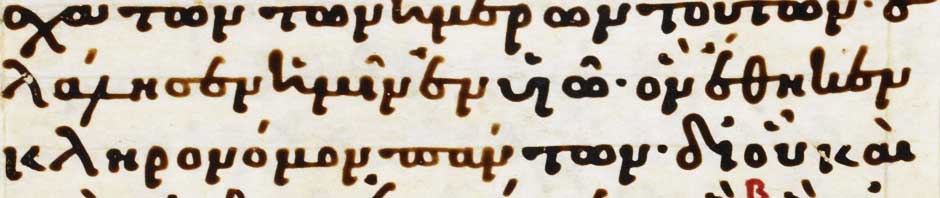
Luke 1:27
Πρὸς παρθένον μεμνηστευμένην ἀνδρὶ, ᾧ ὄνομα Ἰωσὴφ, ἐξ οἴκου Δαυῒδ, καὶ τὸ ὄνομα τῆς παρθένου Μαριάμ.
1. A Character Introduction in Slow Motion
This verse feels like the careful introduction of an important character in a story.
Greek does not simply say:
“to Mary”
Instead, the language unfolds gradually:
a virgin → engaged → to a man → named Joseph → from David’s house → named Mary
The sentence carefully builds identity layer by layer. Greek allows the reader to meet the characters before the action begins.
2. Transliteration
pros parthénon memnistevménin andrí, o ónoma Iosíf, ex íku Dhavídh, ke to ónoma tis parthénu Mariám.
3. Literal Translation
“to a virgin having been betrothed to a man whose name was Joseph, from the house of David, and the name of the virgin was Mary.”
4. Grammar Focus: The Perfect Participle That Describes a Continuing State
The most important grammatical feature in this verse is:
μεμνηστευμένην
This is a perfect participle.
For beginners, a perfect participle often describes an action that happened in the past but whose result continues into the present situation.
Imagine the difference:
Past action: a betrothal took place.
Present result: she now stands in the state of being betrothed.
Greek could have simply described Mary as a virgin. Instead, it adds her existing relationship status. The perfect participle helps create a fuller picture of her situation before the narrative unfolds.
The grammar quietly says:
“She has been betrothed and remains betrothed.”
5. Vocabulary Builder: Building the Scene One Word at a Time
| Greek Word | Meaning | Beginner Insight |
|---|---|---|
| παρθένον | virgin | This is the first description the reader encounters. |
| μεμνηστευμένην | having been betrothed | A past event with continuing results. |
| ἀνδρὶ | to a man | The relationship is introduced before the man is named. |
| Ἰωσὴφ | Joseph | The name is revealed after the relationship is described. |
| Δαυῒδ | David | This connects Joseph to a royal lineage. |
| Μαριάμ | Mary | The sentence finally reveals her name at the end. |
6. Syntax Insight: Greek Delays the Name for Dramatic Effect
One fascinating feature of this verse is that the name Μαριάμ does not appear immediately.
Greek first gives descriptions:
virgin → betrothed → man → Joseph → house of David → Mary
The sentence works like a slow camera zoom.
The reader learns:
- her status
- her relationship
- the man’s identity
- his ancestry
- finally her name
Greek frequently places important information later in the sentence for emphasis.
When we finally reach:
καὶ τὸ ὄνομα τῆς παρθένου Μαριάμ
the name feels significant because the sentence has carefully prepared for it.
7. Beginner Practice Activity: Find the Perfect Participle
Which word is the perfect participle describing Mary’s continuing state?
| Greek Word | Perfect Participle? |
|---|---|
| παρθένον | ? |
| μεμνηστευμένην | ? |
| Ἰωσὴφ | ? |
Click to Reveal the Answer
Answer: μεμνηστευμένην.
This perfect participle describes a completed betrothal whose effects continue into the present situation. Mary has been betrothed and remains in that state.
How the Greek Carefully Introduces the Characters
This verse demonstrates how Greek can introduce people gradually rather than all at once.
The language carefully layers information:
- a virgin
- already betrothed
- to Joseph
- from David’s house
- named Mary
The perfect participle μεμνηστευμένην quietly anchors the entire description. It tells us that a significant event has already taken place and continues to shape the present moment.
Before the angel even speaks, Greek has already prepared the reader by carefully establishing the relationships, identities, and setting of the story.

