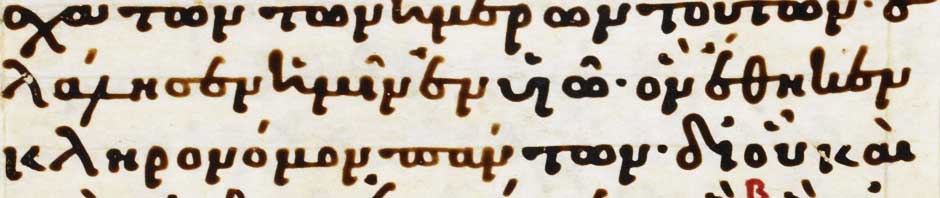
John 1:29
Τῇ ἐπαύριον βλέπει ὁ Ἰωάννης τὸν Ἰησοῦν ἐρχόμενον πρὸς αὐτόν, καὶ λέγει· Ἴδε ὁ ἀμνὸς τοῦ Θεοῦ ὁ αἴρων τὴν ἁμαρτίαν τοῦ κόσμου.
1. A Scene You Can Almost Watch Unfold
Some Greek verses feel like snapshots. This one feels like a moving scene.
The reader watches events unfold in real time:
John sees.
Jesus approaches.
John speaks.
A profound declaration follows.
The grammar helps create this movement. Greek does not merely tell us that Jesus arrived. It lets us see Him approaching.
2. Transliteration
Ti epávrion vlépi o Ioánnis ton Iisoún erhómenon pros aftón, ke léghi· Ídhe o amnós tu Theú o éron tin amartían tu kósmu.
3. Literal Translation
“On the next day John sees Jesus coming toward him, and he says, ‘Behold, the Lamb of God, the one taking away the sin of the world.’”
4. Grammar Focus: Two Participles That Keep the Action Alive
The most important feature in this verse is the use of two participles:
ἐρχόμενον = coming
αἴρων = taking away
Both participles create movement.
The first participle:
ἐρχόμενον πρὸς αὐτόν
“coming toward him”
allows the reader to watch Jesus approaching John.
The second participle:
ὁ αἴρων τὴν ἁμαρτίαν τοῦ κόσμου
“the one taking away the sin of the world”
describes an ongoing role rather than a single isolated act.
For beginners, participles often function like living descriptions. Instead of freezing the scene, they keep it moving.
5. Vocabulary Builder: The Key Words of the Scene
| Greek Word | Meaning | Beginner Insight |
|---|---|---|
| βλέπει | sees | John’s observation begins the scene. |
| ἐρχόμενον | coming | The reader sees Jesus approaching. |
| Ἴδε | behold! | A word that directs attention. |
| ἀμνὸς | lamb | The central image of John’s declaration. |
| αἴρων | taking away | An active participle describing what the Lamb does. |
| κόσμου | world | The scope of the statement becomes universal. |
6. Syntax Insight: The Verse Moves From Sight to Meaning
One beautiful feature of this verse is how the syntax progresses from physical sight to spiritual interpretation.
Notice the sequence:
seeing → approaching → speaking → revealing
First:
βλέπει ὁ Ἰωάννης
“John sees”
Then:
τὸν Ἰησοῦν ἐρχόμενον
“Jesus coming”
Then:
καὶ λέγει
“and he says”
Finally:
Ἴδε ὁ ἀμνὸς τοῦ Θεοῦ
“Behold, the Lamb of God”
The reader first observes what John observes. Only afterward does John explain what it means.
Greek therefore guides us from observation to interpretation.
7. Beginner Practice Activity: Identify the Participles
Which TWO words are participles in this verse?
| Greek Word | Participle? |
|---|---|
| ἐρχόμενον | ? |
| αἴρων | ? |
| βλέπει | ? |
Click to Reveal the Answer
Answer: ἐρχόμενον and αἴρων.
Both are participles. ἐρχόμενον describes Jesus as “coming,” while αἴρων describes Him as “taking away” the sin of the world. βλέπει is the main verb meaning “he sees.”
How the Grammar Quietly Reveals Who Jesus Is
This verse begins with a simple act of seeing, but it ends with a profound declaration.
The participles keep the scene alive:
- Jesus is coming
- the Lamb is taking away
Nothing feels static. The grammar creates movement both physically and spiritually.
John first sees a man approaching. Then he announces an identity:
Ἴδε ὁ ἀμνὸς τοῦ Θεοῦ
“Behold, the Lamb of God.”
The Greek sentence guides the reader from observation to revelation, from a visible figure approaching along the road to a declaration about the One who takes away the sin of the world.

