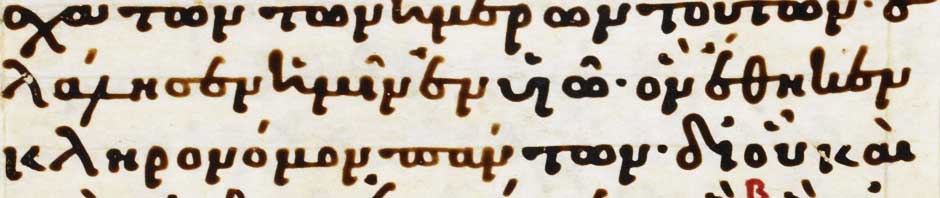
John 12:6
Εἶπεν δὲ τοῦτο οὐχ ὅτι περὶ τῶν πτωχῶν ἔμελεν αὐτῷ ἀλλ᾽ ὅτι κλέπτης ἦν καὶ τὸ γλωσσόκομον εἶχέν καὶ τὰ βαλλόμενα ἐβάσταζεν
Transliteration
Eipen de touto ouch hoti peri tōn ptōchōn emelen autō all’ hoti kleptēs ēn kai to glōssokomon eichen kai ta ballomena ebastazen.
The pronunciation follows modern Koine-style reading rather than Erasmian reconstruction.
Literal Translation
“He said this not because concern about the poor mattered to him, but because he was a thief, and he had the money box, and he used to carry away the things being put into it.”
The verse exposes motive through layered clauses. The Greek repeatedly uses ὅτι (“because”) to contrast outward speech with inward reality.
Grammar Focus
| Greek Form | Grammar | Function |
|---|---|---|
| ἔμελεν | Imperfect Active Indicative 3SG | Describes ongoing concern or care |
| κλέπτης ἦν | Predicate noun + imperfect verb | States continuing identity: “he was a thief” |
| εἶχέν | Imperfect Active Indicative 3SG | Shows ongoing possession of the money box |
| ἐβάσταζεν | Imperfect Active Indicative 3SG | Indicates repeated or habitual action |
The repeated imperfect verbs create a sense of continuous behavior rather than a single isolated act.
Vocabulary Builder
| Word | Meaning | Notes |
|---|---|---|
| πτωχῶν | poor people | Genitive plural after περὶ |
| κλέπτης | thief | Strong moral accusation |
| γλωσσόκομον | money box / treasury box | A container for funds or valuables |
| βαλλόμενα | things being put in | Present passive participle |
Syntax Insight
The sentence is built around a sharp contrast:
οὐχ ὅτι … ἀλλ᾽ ὅτι
This structure means:
“not because … but because …”
John uses this syntax to expose hidden intention. The first clause rejects a false explanation, while the second clause reveals the real motive.
The verse also chains actions together with repeated καὶ (“and”), producing a cumulative narrative rhythm:
- he was a thief
- and he had the money box
- and he kept taking from it
Practice Prompt
Study the imperfect verbs in the verse:
- ἔμελεν
- εἶχεν
- ἐβάσταζεν
Ask yourself how the meaning would change if John had used the aorist tense instead. Would the verse still communicate ongoing character and repeated behavior as strongly?
