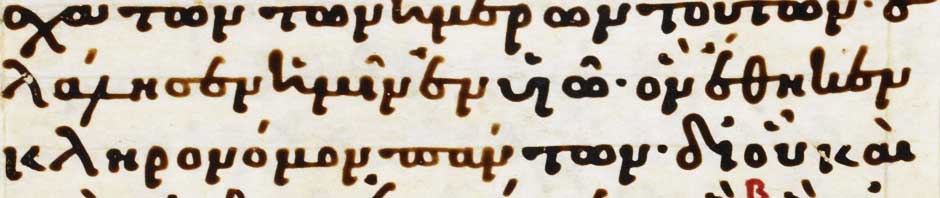
LUKE 18:43
Καὶ παραχρῆμα ἀνέβλεψεν καὶ ἠκολούθει αὐτῷ δοξάζων τὸν θεόν καὶ πᾶς ὁ λαὸς ἰδὼν ἔδωκεν αἶνον τῷ θεῷ
1. Reading the Verse Aloud
kai parachrēma anevlepsen kai ēkolouthei autō doxazōn ton theon kai pas ho laos idōn edōken ainon tō theō
This verse moves quickly. The healed man sees, follows, and praises. Then the people see and give praise too. Greek lets us feel the movement through repeated καὶ, “and.”
2. Literal Translation
And immediately he received sight, and he was following him, glorifying God; and all the people, having seen it, gave praise to God.
3. Grammar Focus: Two Ways Greek Shows Action
The verse uses two important kinds of action:
ἀνέβλεψεν means “he received sight” or “he looked up again.” This is an aorist verb, presenting the action as a complete event.
ἠκολούθει means “he was following.” This is imperfect, showing ongoing action. The man did not merely see once; he began a continuing response.
The Living Movement
Greek paints the scene like this:
ἀνέβλεψεν → he received sight
ἠκολούθει → he kept following
δοξάζων → while glorifying
ἔδωκεν → the crowd gave praise
4. Vocabulary Builder: Words That Carry the Scene
| Greek Word | Pronunciation | Meaning | Beginner Insight |
|---|---|---|---|
| παραχρῆμα | parachrēma | immediately | Shows instant action. |
| ἀνέβλεψεν | anevlepsen | he received sight | A completed healing action. |
| ἠκολούθει | ēkolouthei | he was following | Shows continued discipleship-like movement. |
| δοξάζων | doxazōn | glorifying | A participle showing what he was doing as he followed. |
| αἶνον | ainon | praise | The crowd responds to what they saw. |
5. Syntax Insight: Follow the Chain of Events
The sentence is built like a chain. Each καὶ adds the next movement:
- καὶ παραχρῆμα ἀνέβλεψεν — and immediately he received sight
- καὶ ἠκολούθει αὐτῷ — and he was following Him
- δοξάζων τὸν θεόν — glorifying God
- καὶ πᾶς ὁ λαὸς ἰδὼν — and all the people, having seen
- ἔδωκεν αἶνον τῷ θεῷ — gave praise to God
Notice how the man’s action becomes the people’s response. Greek syntax lets the reader watch praise spread from one healed person to the whole crowd.
6. Manuscript Margin Note: The Participle ἰδὼν
The word ἰδὼν means “having seen.” It tells us what happened before the people gave praise. They saw the healing, and then they responded.
For beginners, think of ἰδὼν as a small storytelling word: it gives the reason behind the next action.
7. Beginner Practice Activity: Trace the Action
Match each Greek word or phrase to its meaning.
| Greek | Your Match |
|---|---|
| παραχρῆμα | A. he was following |
| ἠκολούθει | B. immediately |
| δοξάζων | C. praise |
| αἶνον | D. glorifying |
Answer key: παραχρῆμα = B, ἠκολούθει = A, δοξάζων = D, αἶνον = C.
What This Verse Teaches Your Eyes to Notice
Luke 18:43 teaches the beginner to watch Greek verbs carefully. ἀνέβλεψεν gives the sudden miracle. ἠκολούθει shows the ongoing response. δοξάζων tells what filled that following: praise.
The sentence is simple, but alive. Greek does not merely say that a man was healed. It shows sight becoming movement, movement becoming worship, and worship spreading to the people who saw.
