Galatians 1:21
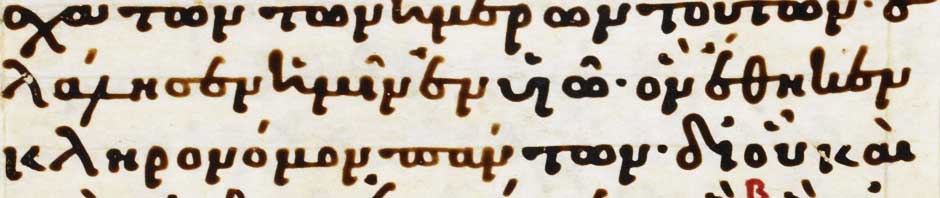
Ἔπειτα ἦλθον εἰς τὰ κλίματα τῆς Συρίας καὶ τῆς Κιλικίας.
1. A Sentence That Quietly Keeps Moving
This verse is short, but Greek makes it feel like a continuation of a larger journey. The sentence begins with:
Ἔπειτα
“Then” / “After that”
Immediately, the reader senses movement forward in time. Greek often uses words like this to connect one stage of a narrative to another. The verse feels transitional, almost like the next step on a map.
2. Transliteration
Épita ílthon is ta klímata tis Syrías ke tis Kilikías.
3. Literal Translation
“Then I came into the regions of Syria and Cilicia.”
4. Grammar Focus: Greek Uses Motion Verbs Very Naturally
The key feature in this verse is the movement verb:
ἦλθον = “I came”
Greek frequently uses simple movement verbs to advance the narrative naturally. Instead of giving long explanations, the language lets geography and motion carry the story.
Notice also the preposition:
εἰς = “into”
This preposition creates directional movement. The sentence does not merely say Paul was in those regions. It describes him entering them.
For beginners, Greek often feels vivid because verbs and prepositions work together closely:
ἦλθον → movement
εἰς → direction
τὰ κλίματα → destination
5. Vocabulary Builder: Mapping the Journey Through Greek
| Greek Word | Meaning | Beginner Insight |
|---|---|---|
| Ἔπειτα | then / after that | This word pushes the narrative forward. |
| ἦλθον | I came | Greek narrative often moves through simple travel verbs. |
| εἰς | into | The preposition creates directional motion. |
| κλίματα | regions | This word refers to geographical areas or territories. |
| Συρίας | Syria | The journey now expands beyond one local setting. |
| Κιλικίας | Cilicia | Paul’s story becomes geographically wider. |
6. Syntax Insight: Greek Lets Geography Carry the Narrative
This verse contains very few words, yet it feels expansive because Greek places the locations at the end of the sentence.
The structure unfolds naturally:
time → movement → destination
First:
Ἔπειτα
“After that”
Then:
ἦλθον
“I came”
Finally:
εἰς τὰ κλίματα τῆς Συρίας καὶ τῆς Κιλικίας
“into the regions of Syria and Cilicia”
The sentence gradually widens. By the end, the reader mentally sees distant territories opening before the traveler.
Greek often creates this feeling of expansion through sentence order.
7. Beginner Practice Activity: Identify the Movement Words
Which TWO words help create the idea of movement or travel in the verse?
| Greek Word | Movement or Travel? |
|---|---|
| ἦλθον | ? |
| εἰς | ? |
| κλίματα | ? |
Click to Reveal the Answer
Answer: ἦλθον and εἰς.
ἦλθον is the movement verb meaning “I came,” while εἰς means “into,” showing direction toward a place. Together they create the feeling of travel.
How the Greek Quietly Expands the Horizon
This verse shows that Greek does not always need long descriptions to create movement. A simple verb, a directional preposition, and distant place names can open an entire landscape in the reader’s imagination.
The sentence feels transitional and forward-moving:
- time advances
- the traveler moves
- new regions appear
Greek often tells stories this way. Instead of pausing for explanation, it allows motion itself to carry the narrative forward.
Even a short sentence can feel like the opening of a much larger road.

