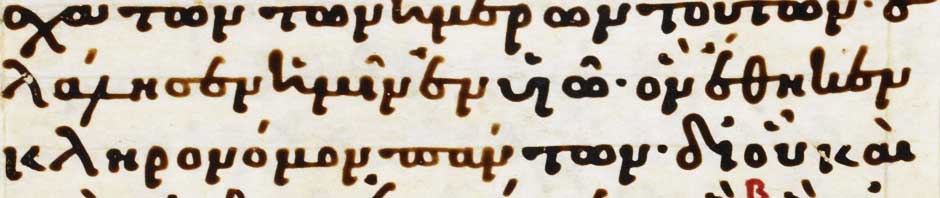
Philippians 1:22
Εἰ δὲ τὸ ζῆν ἐν σαρκί, τοῦτό μοι καρπὸς ἔργου, καὶ τί αἱρήσομαι οὐ γνωρίζω.
1. The Sentence Begins Without Finishing Immediately
This verse feels emotionally suspended. Paul begins a thought, but Greek delays the emotional landing:
Εἰ δὲ τὸ ζῆν ἐν σαρκί…
“But if living in the flesh…”
The sentence feels unfinished for a moment. Greek allows the reader to sit inside the tension before the explanation appears.
Paul is thinking out loud. The grammar mirrors inner struggle.
2. Transliteration
i dhe to zín en sarkí, túto mi karpós érgou, ke tí erísome u gnorízo.
3. Literal Translation
“But if living in the flesh, this for me is fruit of work, and what I will choose I do not know.”
4. Grammar Focus: The Infinitive That Becomes a Living Idea
The key feature in this verse is:
τὸ ζῆν
“the living” / “to live”
Greek uses the infinitive ζῆν (“to live”) together with the article τὸ. This turns the action into an idea or state.
Instead of simply saying:
“if I live”
Greek says something closer to:
“if the living in the flesh…”
This makes life itself feel like a condition Paul is examining carefully.
The sentence becomes reflective rather than merely narrative.
5. Vocabulary Builder: Words Inside the Inner Conflict
| Greek Word | Meaning | Beginner Insight |
|---|---|---|
| ζῆν | to live | The infinitive makes “living” feel like a concept being weighed. |
| σαρκί | flesh | Here it refers to earthly bodily life. |
| καρπὸς | fruit | Greek often uses fruit imagery for productive spiritual work. |
| ἔργου | work | The living Paul describes still has purpose and labor. |
| αἱρήσομαι | I will choose | The verse turns into a personal inner decision. |
| γνωρίζω | I know | Paul openly admits uncertainty. |
6. Syntax Insight: Greek Delays the Main Emotional Conflict
One striking feature of this verse is how Greek postpones the final emotional statement.
The sentence unfolds like a thought process:
possibility → value → uncertainty
First:
Εἰ δὲ τὸ ζῆν ἐν σαρκί
“But if living in the flesh…”
Then:
τοῦτό μοι καρπὸς ἔργου
“this is fruit of work for me”
Finally:
καὶ τί αἱρήσομαι οὐ γνωρίζω
“and what I will choose I do not know”
Greek places uncertainty at the very end. The sentence slowly narrows from abstract reflection into personal emotional tension.
The delayed confession:
οὐ γνωρίζω
“I do not know”
lands heavily because the sentence has been building toward it gradually.
7. Beginner Practice Activity: Find the Infinitive
Which word in the verse is the infinitive meaning “to live”?
| Greek Word | Meaning |
|---|---|
| ζῆν | ? |
| καρπὸς | ? |
| γνωρίζω | ? |
Click to Reveal the Answer
Answer: ζῆν.
ζῆν means “to live.” It is an infinitive, and Greek uses it together with the article τὸ to make “living” feel like a reflective idea rather than just an action.
How the Greek Allows Us to Hear Paul Thinki Philippians 1:22
Εἰ δὲ τὸ ζῆν ἐν σαρκί, τοῦτό μοι καρπὸς ἔργου, καὶ τί αἱρήσομαι οὐ γνωρίζω.
1. The Sentence Begins Without Finishing Immediately
This verse feels emotionally suspended. Paul begins a thought, but Greek delays the emotional landing:
Εἰ δὲ τὸ ζῆν ἐν σαρκί…
“But if living in the flesh…”
The sentence feels unfinished for a moment. Greek allows the reader to sit inside the tension before the explanation appears.
Paul is thinking out loud. The grammar mirrors inner struggle.
2. Transliteration
i dhe to zín en sarkí, túto mi karpós érgou, ke tí erísome u gnorízo.
3. Literal Translation
“But if living in the flesh, this for me is fruit of work, and what I will choose I do not know.”
4. Grammar Focus: The Infinitive That Becomes a Living Idea
The key feature in this verse is:
τὸ ζῆν
“the living” / “to live”
Greek uses the infinitive ζῆν (“to live”) together with the article τὸ. This turns the action into an idea or state.
Instead of simply saying:
“if I live”
Greek says something closer to:
“if the living in the flesh…”
This makes life itself feel like a condition Paul is examining carefully.
The sentence becomes reflective rather than merely narrative.
5. Vocabulary Builder: Words Inside the Inner Conflict
Greek Word Meaning Beginner Insight
ζῆν to live The infinitive makes “living” feel like a concept being weighed.
σαρκί flesh Here it refers to earthly bodily life.
καρπὸς fruit Greek often uses fruit imagery for productive spiritual work.
ἔργου work The living Paul describes still has purpose and labor.
αἱρήσομαι I will choose The verse turns into a personal inner decision.
γνωρίζω I know Paul openly admits uncertainty.
6. Syntax Insight: Greek Delays the Main Emotional Conflict
One striking feature of this verse is how Greek postpones the final emotional statement.
The sentence unfolds like a thought process:
possibility → value → uncertainty
First:
Εἰ δὲ τὸ ζῆν ἐν σαρκί
“But if living in the flesh…”
Then:
τοῦτό μοι καρπὸς ἔργου
“this is fruit of work for me”
Finally:
καὶ τί αἱρήσομαι οὐ γνωρίζω
“and what I will choose I do not know”
Greek places uncertainty at the very end. The sentence slowly narrows from abstract reflection into personal emotional tension.
The delayed confession:
οὐ γνωρίζω
“I do not know”
lands heavily because the sentence has been building toward it gradually.
7. Beginner Practice Activity: Find the Infinitive
Which word in the verse is the infinitive meaning “to live”?
Greek Word Meaning
ζῆν ?
καρπὸς ?
γνωρίζω ?
Click to Reveal the Answer
Answer: ζῆν.
ζῆν means “to live.” It is an infinitive, and Greek uses it together with the article τὸ to make “living” feel like a reflective idea rather than just an action.
How the Greek Allows Us to Hear Paul Thinking
This verse feels deeply personal because Greek does not present the thought as neat or immediate. The sentence unfolds slowly, almost like someone speaking while wrestling internally.
Paul weighs:
living
fruitful work
choice
uncertainty
The grammar mirrors emotional hesitation. Greek allows the reader to remain inside the unresolved tension until the final confession appears:
οὐ γνωρίζω
“I do not know.”
Instead of sounding weak, the uncertainty makes the sentence feel profoundly human. ng
This verse feels deeply personal because Greek does not present the thought as neat or immediate. The sentence unfolds slowly, almost like someone speaking while wrestling internally.
Paul weighs:
- living
- fruitful work
- choice
- uncertainty
The grammar mirrors emotional hesitation. Greek allows the reader to remain inside the unresolved tension until the final confession appears:
οὐ γνωρίζω
“I do not know.”
Instead of sounding weak, the uncertainty makes the sentence feel profoundly human.

