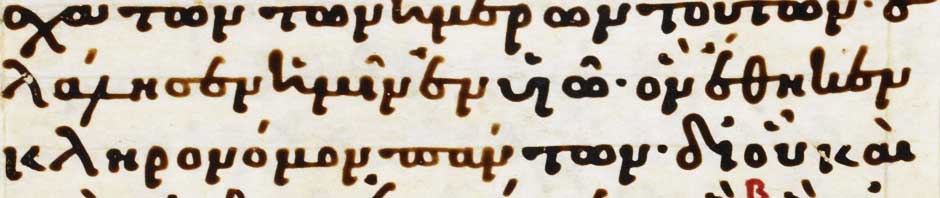
John 19:38
Μετὰ δὲ ταῦτα ἠρώτησεν τὸν Πιλᾶτον ὁ Ἰωσὴφ ὁ ἀπὸ Ἁριμαθαίας ὢν μαθητὴς τοῦ Ἰησοῦ κεκρυμμένος δὲ διὰ τὸν φόβον τῶν Ἰουδαίων ἵνα ἄρῃ τὸ σῶμα τοῦ Ἰησοῦ· καὶ ἐπέτρεψεν ὁ Πιλᾶτος ἦλθεν οὖν καὶ ἦρεν τὸ σῶμα τοῦ Ἰησοῦ
A Sentence That Slowly Reveals a Person
This verse does not describe Joseph of Arimathea all at once.
Instead, Greek gradually unfolds information about him piece by piece:
Joseph → from Arimathea → disciple of Jesus → hidden disciple → fearful disciple
Greek often uses participles this way. Rather than stopping the story to explain background information separately, the sentence weaves description directly into the action.
Transliteration
Meta de tauta ērōtēsen ton Pilaton ho Iōsēph ho apo Harimathaias ōn mathētēs tou Iēsou kekrymmenos de dia ton phobon tōn Ioudaiōn hina arē to sōma tou Iēsou; kai epetrepsen ho Pilatos ēlthen oun kai ēren to sōma tou Iēsou
Literal Translation
“After these things Joseph from Arimathea asked Pilate, being a disciple of Jesus, but hidden because of the fear of the Jews, that he might take away the body of Jesus; and Pilate permitted it. Therefore he came and took away the body of Jesus.”
Grammar Focus — Participles Add Background Information
This verse contains important participles that describe Joseph while the story continues moving forward.
ὢν
“being”
κεκρυμμένος
“hidden”
The main action is:
ἠρώτησεν τὸν Πιλᾶτον
“he asked Pilate”
Everything else helps explain who Joseph is and why the moment matters.
Greek participles often function like little descriptive windows inside the sentence.
Vocabulary Builder — Words Inside the Narrative
| Greek Word | Pronunciation | Meaning | Beginner Insight |
|---|---|---|---|
| μαθητὴς | mathētēs | disciple | A learner, follower, or student. |
| κεκρυμμένος | kekrymmenos | hidden | A perfect participle describing a continuing hidden state. |
| φόβον | phobon | fear | Greek often connects fear with motives and actions. |
| σῶμα | sōma | body | A central word repeated for emphasis in the verse. |
The Small Word That Introduces Purpose
One important word in the verse is:
ἵνα
This word often means:
“so that” or “in order that”
It introduces Joseph’s purpose in asking Pilate.
ἵνα ἄρῃ τὸ σῶμα
“so that he might take away the body”
How Greek Keeps the Story Moving
Near the end of the verse, the story suddenly becomes very direct and simple:
καὶ ἐπέτρεψεν ὁ Πιλᾶτος
“and Pilate permitted”
ἦλθεν οὖν καὶ ἦρεν
“therefore he came and took”
After the long descriptive section, Greek suddenly switches into short narrative actions.
The pacing changes. The story moves quickly once permission is granted.
Beginner Practice Activity
Match the Greek word with its meaning.
| Greek | Your Match |
|---|---|
| μαθητὴς | A. fear |
| φόβον | B. disciple |
| σῶμα | C. body |
Small Grammar Challenge: Which two participles describe Joseph in the verse?
What the Sentence Quietly Reveals
This verse shows how Greek can reveal character gradually rather than instantly.
Joseph is introduced not merely by name, but through layers of description, fear, loyalty, and action. The participles allow the reader to see both his hidden fear and his courageous decision within the same sentence.
As beginners read more Greek narrative, they begin noticing how grammar often carries emotional and narrative depth quietly beneath the surface.
