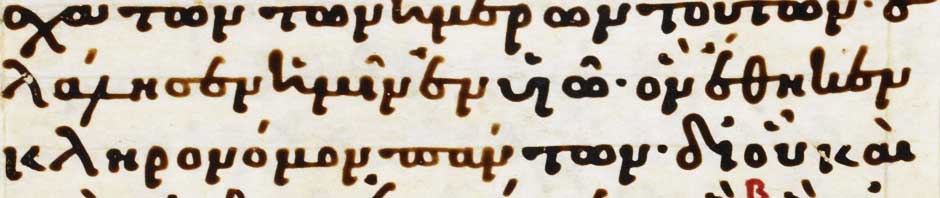
Galatians 4:31
ἄρα, ἀδελφοί οὐκ ἐσμὲν παιδίσκης τέκνα ἀλλὰ τῆς ἐλευθέρας
A Sentence That Sounds Like a Conclusion
This verse feels short, but it carries strong finality.
Paul has been building a long comparison, and now the Greek suddenly becomes direct and decisive.
not children of the slave woman → but of the free woman
The sentence works almost like a final verdict after a long argument.
Transliteration
ara, adelphoi, ouk esmen paidiskēs tekna alla tēs eleutheras
Literal Translation
“Therefore, brothers, we are not children of a slave woman, but of the free woman.”
Grammar Focus — The Importance of ἀλλὰ
The most important structural word in this verse is:
ἀλλὰ
This word means:
“but”
Greek uses ἀλλὰ for strong contrast.
The sentence first states what believers are not, and then immediately states what they are.
οὐκ ἐσμὲν παιδίσκης τέκνα
“we are not children of the slave woman”
ἀλλὰ τῆς ἐλευθέρας
“but of the free woman”
The contrast is the heart of the verse.
Vocabulary Builder — Family and Freedom Language
| Greek Word | Pronunciation | Meaning | Beginner Insight |
|---|---|---|---|
| ἀδελφοί | adelphoi | brothers/brothers and sisters | A common family-style address in early Christian writing. |
| παιδίσκης | paidiskēs | slave girl/slave woman | A word connected with servitude or bondage. |
| τέκνα | tekna | children | Often emphasizes relationship and belonging. |
| ἐλευθέρας | eleutheras | free woman | Related to freedom, liberty, and release from bondage. |
The Small Word ἄρα
The verse begins with:
ἄρα
This word often means:
“therefore” or “so then”
Greek writers frequently use words like this when drawing a conclusion from previous discussion.
The verse sounds like:
“So then… this is the result.”
How Greek Avoids Repeating Words
Notice something interesting:
παιδίσκης τέκνα
“children of the slave woman”
τῆς ἐλευθέρας
“of the free woman”
Greek leaves out the word τέκνα (“children”) in the second phrase because it is already understood from the first part.
This is common in Greek. Once an idea has been introduced clearly, the language often omits repeated words to keep the sentence concise.
Beginner Practice Activity
Match the Greek word with its meaning.
| Greek | Your Match |
|---|---|
| τέκνα | A. free woman |
| ἐλευθέρας | B. children |
| ἀδελφοί | C. brothers |
Small Observation Challenge: Which Greek word introduces the strong contrast in the verse?
What This Short Sentence Quietly Emphasizes
This verse shows how Greek can communicate strong theological identity through very compact structure.
The opening word ἄρα signals conclusion. The negative statement creates separation from bondage. The strong contrast word ἀλλὰ redirects the sentence toward freedom. And the omission of repeated words keeps the conclusion concise and forceful.
As beginners continue learning Greek, they begin seeing how even short verses can contain carefully balanced structure, contrast, and emphasis.

