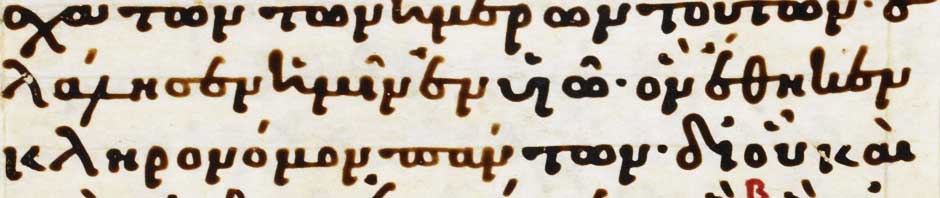
Matthew 1:15
Ἐλιοὺδ δὲ ἐγέννησεν τὸν Ἐλεάζαρ, Ἐλεάζαρ δὲ ἐγέννησεν τὸν Ματθάν, Ματθὰν δὲ ἐγέννησεν τὸν Ἰακώβ,
The Sentence Moves Like a Steady Chain
Eliúd de egénnisen ton Eleázar, Eleázar de egénnisen ton Matthán, Matthán de egénnisen ton Iakóv
At first glance, this verse may seem repetitive.
But the repetition is intentional.
Greek creates a rhythmic chain of generations moving steadily forward through history.
one generation
leads to another
and then another
The sentence feels stable, deliberate, and continuous.
Greek genealogy is not trying to sound dramatic. It is trying to sound unbroken.
Literal Translation
“And Eliud fathered Eleazar, and Eleazar fathered Matthan, and Matthan fathered Jacob,”
The wording repeats almost exactly from phrase to phrase.
That repetition is the point.
The genealogy sounds like an unfolding sequence through time.
The Emotional Feel of the Verse
This verse feels steady and continuous rather than emotional or dramatic.
The repeated structure creates a sense of:
- continuity
- inheritance
- historical movement
- generational connection
Greek makes the genealogy feel like a carefully preserved line stretching across centuries.
Grammar Focus — The Repeated Verb Creates the Genealogical Rhythm
The key grammatical feature is the repeated verb:
ἐγέννησεν
meaning:
“fathered” or “begot.”
Greek repeats the exact same verb again and again:
Ἐλιοὺδ δὲ ἐγέννησεν
↓
Ἐλεάζαρ δὲ ἐγέννησεν
↓
Ματθὰν δὲ ἐγέννησεν
The repetition creates rhythm and continuity.
The genealogy therefore sounds structured and reliable.
Greek often uses repetition this way to create stability and flow across long passages.
Vocabulary Builder — Words That Carry the Genealogy Forward
| Greek Word | Meaning | Beginner Insight |
|---|---|---|
| ἐγέννησεν | he fathered/begot | This repeated verb forms the backbone of the genealogy. |
| Ἐλεάζαρ | Eleazar | The genealogy preserves real historical names generation after generation. |
| Ματθάν | Matthan | Each name becomes another link in the unfolding line. |
| δὲ | and/but/now | This small connector quietly keeps the genealogy moving forward. |
Syntax Insight — The Sentence Marches Forward Step by Step
The syntax moves in repeating units.
name
↓
fathered
↓
next name
Then the pattern repeats again.
And again.
Greek therefore creates a chain-like rhythm.
The reader feels the genealogy moving steadily through time without interruption.
The repeated structure also helps listeners follow the genealogy when read aloud.
This is one reason biblical genealogies often sound almost musical in Greek.
Beginner Practice Activity — Identifying the Repeated Verb
Which Greek word means “he fathered” or “he begot”?
| Greek Word | Possible Meaning |
|---|---|
| ἐγέννησεν | A. he fathered |
| δὲ | B. and/but |
| Ἰακώβ | C. Jacob |
Click to Reveal the Answer
Answer: ἐγέννησεν = “he fathered” or “he begot.”
Greek repeats this same verb throughout the genealogy to create continuity and a steady generational rhythm.
Listening to the Steady Rhythm of the Generations
This verse may appear simple, but Greek uses repetition very intentionally.
The repeated wording creates:
- continuity
- stability
- historical movement
- generational connection
Each name passes the line forward to the next generation.
The grammar therefore becomes a literary bridge carrying the story across time.
Greek transforms genealogy into rhythmic movement from father to son, generation after generation, until the story finally reaches its fulfillment.

