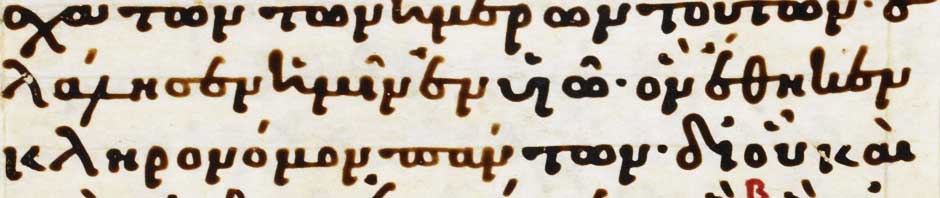
Hebrews 12:9
Εἶτα τοὺς μὲν τῆς σαρκὸς ἡμῶν πατέρας εἴχομεν παιδευτὰς καὶ ἐνετρεπόμεθα· οὐ πολλῷ μᾶλλον ὑποταγησόμεθα τῷ πατρὶ τῶν πνευμάτων καὶ ζήσομεν
Step 1: Read the Sentence as a Question
This verse is shaped like a comparison. It first looks at earthly fathers, then moves to a greater point about the Father of spirits.
eita tous men tēs sarkos hēmōn pateras eichomen paideutas kai enetrepometha; ou pollō mallon hypotagēsometha tō patri tōn pneumatōn kai zēsomem
Literal Translation
Then, indeed, we had the fathers of our flesh as discipliners, and we respected them; shall we not much more be subject to the Father of spirits and live?
The First Side
τοὺς μὲν τῆς σαρκὸς ἡμῶν πατέρας
“the fathers of our flesh”
This refers to human fathers, earthly parents, or those who disciplined us in ordinary human life.
The Greater Side
τῷ πατρὶ τῶν πνευμάτων
“to the Father of spirits”
The verse moves from earthly discipline to divine fatherhood, making the second side much greater.
Grammar Focus: The Power of μὲν and μᾶλλον
This verse uses comparison language. The word μὲν marks the first side of the thought. It often prepares the reader for a contrast or a stronger second point.
τοὺς μὲν … πατέρας = “the fathers, on the one hand…”
Then the phrase οὐ πολλῷ μᾶλλον introduces the greater argument.
οὐ πολλῷ μᾶλλον = “shall we not much more…?”
This is not a neutral question. It expects the answer “yes.” The logic is: if we respected earthly fathers, then much more should we submit to the Father of spirits.
Vocabulary Builder: A Family of Key Words
| Greek Word | Transliteration | Meaning | Simple Usage Insight |
|---|---|---|---|
| εἶτα | eita | then, furthermore | Moves the discussion forward to another point. |
| σάρξ | sarx | flesh | Here it points to earthly, human life. |
| πατέρας | pateras | fathers | Plural form, used for human fathers. |
| παιδευτὰς | paideutas | discipliners, trainers | Connected with training, correction, and instruction. |
| ἐνετρεπόμεθα | enetrepometha | we respected, we showed regard | Shows the response given to earthly fathers. |
| ὑποταγησόμεθα | hypotagēsometha | we shall be subject | Future form, asking what response should follow. |
| ζήσομεν | zēsomem | we shall live | The result connected with submission to the Father. |
Syntax Insight: Watching the Sentence Turn
This sentence has two movements. First, it describes what happened with earthly fathers. Then it asks what should happen with the Father of spirits.
Movement 1: Earthly Example
τοὺς μὲν τῆς σαρκὸς ἡμῶν πατέρας εἴχομεν παιδευτὰς καὶ ἐνετρεπόμεθα
“We had the fathers of our flesh as discipliners, and we respected them.”
Movement 2: Greater Question
οὐ πολλῷ μᾶλλον ὑποταγησόμεθα τῷ πατρὶ τῶν πνευμάτων καὶ ζήσομεν
“Shall we not much more be subject to the Father of spirits and live?”
The phrase οὐ πολλῷ μᾶλλον is the hinge of the sentence. It turns the reader from a smaller example to a greater spiritual reality.
Beginner Practice Activity: Build the Comparison
Match each Greek phrase to its meaning.
| Greek Phrase | Your Match | Meaning |
|---|---|---|
| τῆς σαρκὸς ἡμῶν | A | of our flesh |
| οὐ πολλῷ μᾶλλον | B | shall we not much more |
| τῷ πατρὶ τῶν πνευμάτων | C | to the Father of spirits |
| καὶ ζήσομεν | D | and we shall live |
Tiny Translation Challenge:
Translate this phrase:
οὐ πολλῷ μᾶλλον ὑποταγησόμεθα
Suggested answer: “Shall we not much more be subject?”
Where the Greek Argument Comes Alive
This verse teaches beginners to notice how Greek can reason through comparison. The sentence begins with a familiar human example: τοὺς μὲν τῆς σαρκὸς ἡμῶν πατέρας, “the fathers of our flesh.” Then the verse turns with οὐ πολλῷ μᾶλλον, “shall we not much more,” and moves toward τῷ πατρὶ τῶν πνευμάτων, “the Father of spirits.”
The key to reading this verse naturally is to feel the movement from lesser to greater: earthly fathers were respected, so much more should the Father of spirits be received with submission, and this leads to life.
