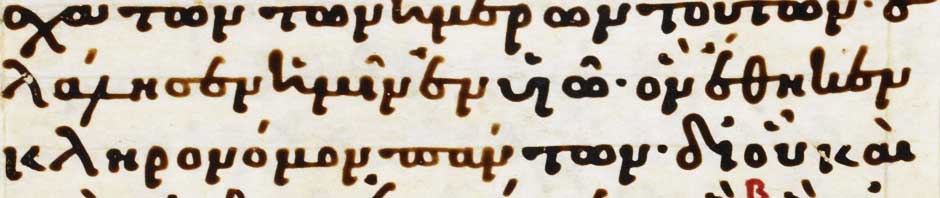
Matthew 2:9
Οἱ δὲ ἀκούσαντες τοῦ βασιλέως ἐπορεύθησαν· καὶ ἰδοὺ ὁ ἀστὴρ ὃν εἶδον ἐν τῇ ἀνατολῇ προῆγεν αὐτοὺς ἕως ἐλθὼν ἐστάθη ἐπάνω οὗ ἦν τὸ παιδίον·
Following the Movement of the Story
This verse feels full of motion.
The travelers listen, depart, follow the star, and finally arrive where the child is.
hearing → traveling → being led → arriving → stopping
Greek keeps the journey flowing through connected verbs and participles. The sentence itself feels like forward movement.
Transliteration
hoi de akousantes tou basileōs eporeuthēsan; kai idou ho astēr hon eidon en tē anatolē proēgen autous heōs elthōn estathē epanō hou ēn to paidion
Literal Translation
“And after hearing the king, they went away; and behold, the star which they saw in the east was leading them until, after coming, it stood above where the child was.”
Grammar Focus — Participles Connect the Actions
Two important participles help move the story smoothly:
ἀκούσαντες
“having heard”
ἐλθὼν
“having come”
Greek often uses participles before the main action:
ἀκούσαντες … ἐπορεύθησαν
“after hearing … they went”
ἐλθὼν … ἐστάθη
“after coming … it stood”
The participles make the sequence feel natural and connected.
One action leads directly into the next.
Vocabulary Builder — Journey and Guidance
| Greek Word | Pronunciation | Meaning | Beginner Insight |
|---|---|---|---|
| ἀστὴρ | astēr | star | The source of the English word “asterisk.” |
| προῆγεν | proēgen | was leading | A verb of guiding or going before others. |
| ἐστάθη | estathē | stood | The movement finally comes to rest here. |
| παιδίον | paidion | child | A diminutive form often referring to a young child. |
The Word ἰδοὺ Changes the Atmosphere
Suddenly the verse says:
ἰδοὺ
This word means:
“behold!” or “look!”
Greek often uses it to draw attention to something important or surprising.
The story suddenly becomes vivid and immediate:
“And look — the star…”
How the Movement Finally Stops
Most of the verse feels active and moving:
they went
the star led
it came
it stood
Everything finally slows down at:
ἐστάθη
“it stood”
The entire journey reaches its resting point over the child.
Beginner Practice Activity
Match the Greek word with its meaning.
| Greek | Your Match |
|---|---|
| ἀστὴρ | A. child |
| παιδίον | B. star |
| προῆγεν | C. was leading |
Small Grammar Challenge: Which two participles help connect the actions of the journey?
Following the Flow of the Greek Narrative
This verse teaches beginners how Greek narrative often feels smooth and connected rather than abrupt.
The participles quietly guide the sequence forward. The word ἰδοὺ suddenly brightens the scene with surprise. The movement verbs keep the journey active. And finally the single verb ἐστάθη brings the entire sentence to rest.
As readers continue learning Greek, they begin noticing how grammar itself can create motion, pacing, and atmosphere inside a story.

