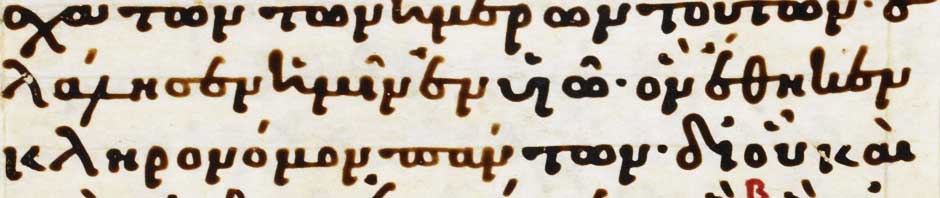
Matthew 2:19
Τελευτήσαντος δὲ τοῦ Ἡρῴδου ἰδοὺ ἄγγελος Κυρίου φαίνεται κατ’ ὄναρ τῷ Ἰωσὴφ ἐν Αἰγύπτῳ
The Story Opens With a Background Event
This verse begins quietly with an event already completed:
“After Herod died…”
Only after that background information does the main action appear:
“behold, an angel appears…”
Greek often places setting information first so the reader understands the circumstances before the main event begins.
Transliteration
Teleutēsantos de tou Hērōdou idou angelos Kyriou phainetai kat’ onar tō Iōsēph en Aigyptō
Literal Translation
“And after Herod died, behold, an angel of the Lord appears in a dream to Joseph in Egypt.”
Grammar Focus — The Genitive Absolute
The verse begins with a famous Greek construction:
Τελευτήσαντος τοῦ Ἡρῴδου
Literally:
“Herod having died”
This is called a genitive absolute.
In beginner-friendly terms, it is a Greek way of giving background circumstances before the main sentence begins.
English often translates it with phrases like:
- “after…”
- “when…”
- “while…”
So the verse naturally becomes:
“After Herod died…”
Vocabulary Builder — Dreams and Appearance
| Greek Word | Pronunciation | Meaning | Beginner Insight |
|---|---|---|---|
| ἄγγελος | angelos | angel / messenger | The basic meaning is “messenger.” |
| φαίνεται | phainetai | appears | A verb connected with becoming visible. |
| ὄναρ | onar | dream | Used specifically for dreams or dream visions. |
| Αἰγύπτῳ | Aigyptō | Egypt | The location where Joseph is staying. |
The Sudden Word ἰδοὺ
After the quiet opening, Greek suddenly says:
ἰδοὺ
This word means:
“behold!” or “look!”
Greek often uses it to suddenly redirect the reader’s attention.
The sentence moves from background history to immediate divine action.
How Greek Balances Quietness and Surprise
The verse has two very different moods:
background calm
“after Herod died…”
sudden interruption
“behold, an angel appears…”
Greek smoothly shifts from historical setting into dramatic revelation.
The grammar quietly prepares the reader before the heavenly message suddenly enters the story.
Beginner Practice Activity
Match the Greek word with its meaning.
| Greek | Your Match |
|---|---|
| ἄγγελος | A. dream |
| ὄναρ | B. angel/messenger |
| φαίνεται | C. appears |
Small Grammar Challenge: Which phrase in the verse forms the genitive absolute?
What the Opening Grammar Quietly Accomplishes
This verse teaches beginners how Greek often prepares the setting before introducing the main action.
The genitive absolute quietly establishes the historical moment. The sudden word ἰδοὺ redirects attention. And the present-tense verb φαίνεται makes the angel’s appearance feel immediate and vivid.
As readers continue learning Greek, they begin noticing how even small grammatical constructions can shape pacing, atmosphere, and dramatic tension inside a narrative.

