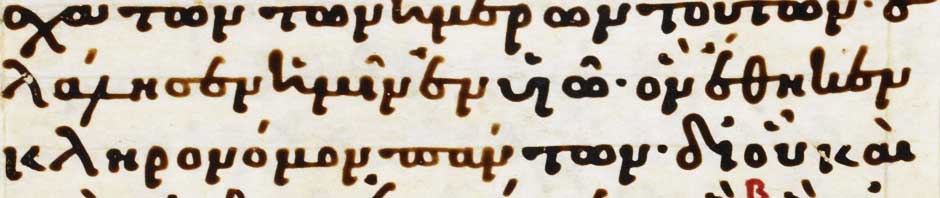
Οὐχὶ δύο στρουθία ἀσσαρίου πωλεῖται; καὶ ἓν ἐξ αὐτῶν οὐ πεσεῖται ἐπὶ τὴν γῆν ἄνευ τοῦ πατρὸς ὑμῶν. (Matthew 10:29)
Are not two sparrows sold for a penny? And yet not one of them will fall to the ground apart from your Father.
Value Measured by the Father, Not the Market
In Matthew 10:29, Jesus frames divine providence through the language of ordinary commerce: οὐχὶ δύο στρουθία ἀσσαρίου πωλεῖται; (“Are not two sparrows sold for an assarion?”). The ἀσσάριον was a minimal, almost trivial copper coin, underscoring how little these birds were worth in economic terms. Sparrows, common and inexpensive, symbolized things easily dismissed by human society. Jesus employs this imagery not to reduce human value but to heighten it through contrast. If creatures considered so insignificant are still within the Father’s attentive care, then the disciples, sent out into persecution and uncertainty, are held infinitely closer. By invoking an everyday marketplace transaction, Jesus roots His theology of providence in the ordinary, teaching that God’s concern is not located only in grand events but in the unnoticed corners of life.
A Fall Not Outside the Father’s Knowledge
The verse intensifies with the second clause: καὶ ἓν ἐξ αὐτῶν οὐ πεσεῖται ἐπὶ τὴν γῆν ἄνευ τοῦ πατρὸς ὑμῶν—“and one of them will not fall to the ground without your Father.” The verb πεσεῖται (future middle) conveys even the simplest downward motion of the sparrow as intimately known. The phrase ἐπὶ τὴν γῆν suggests not merely death but any collapse, stumble, or descent. The preposition ἄνευ (“without”) underscores that nothing transpires apart from the Father’s will, presence, or permission. The genitive τοῦ πατρὸς ὑμῶν makes the providence relational rather than mechanical—He is not merely “the” Father but “your” Father. This shifts the message from general theology to personal assurance. Jesus is not describing fate but care, not determinism but intimate sovereignty.
Providence as Presence, Not Distance
The imagery of Matthew 10:29 challenges assumptions about divine aloofness. The fall of a sparrow is an event so small that few humans would notice it, yet Jesus asserts that such a moment unfolds within the Father’s sphere of attention. This transforms the doctrine of providence into something warm and relational. The Father is not a distant observer but One whose knowledge encompasses even the smallest rhythms of creaturely existence. The disciples, about to face opposition and danger, are assured that they live under a gaze that does not overlook a single feather. Jesus’ words insist that divine sovereignty is not cold power but attentive love. The God who governs the cosmos is the same God who attends the fall of a sparrow and the steps of His children.
Living as Those Seen by the Father
The message of Matthew 10:29 calls believers into a posture of trust. If even sparrows—creatures of negligible value in human markets—are never outside the Father’s care, then neither are His people. This does not promise exemption from hardship, but it guarantees that no hardship unfolds unnoticed. Every fear, every threat, every unknown step is taken under the compassionate oversight of the Father. The verse invites us to reinterpret our anxieties in the light of divine attention. We are not forgotten, not abandoned, not overlooked. We are held by the One who watches the smallest bird descend toward the earth. To live in this truth is to walk with courage, not because danger disappears, but because the Father sees, knows, and accompanies His children through every rise and fall.
