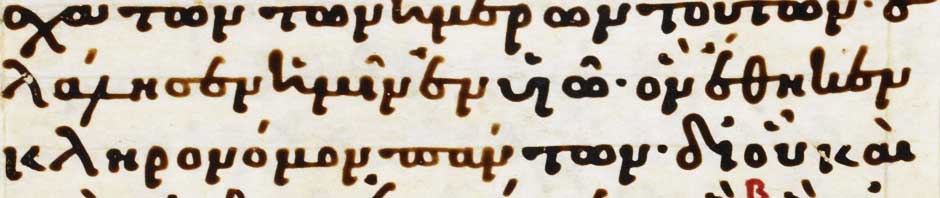
Greek accent marks—acute, grave, and circumflex—are more than ornamental flourishes; they’re linguistic guardians that have shaped pronunciation, meaning, and rhythm across centuries. In Classical Greek, accents signaled pitch variations, with the acute rising, the grave lowering, and the circumflex curving up then down. As Greek evolved into Koine and Modern forms, these tonal distinctions faded into stress-based pronunciation, yet the marks persisted in manuscripts, guiding readers through homographs and inflected forms. From the melodic contours of δῶρον to the grammatical clarity of ὅτι versus ὅ,τι, accentuation remains a vital tool for parsing, preaching, and preserving the rich legacy of the Greek language—especially in the study of New Testament texts.… Learn Koine Greek
-
Greek Lessons
- When News Travels: The Grammar of Report and Mission
- When Memory Speaks: Learning to Compose Greek from Mark 11:21
- When a Finger Moves the World: The Grammar of Arrival Hidden in an Exorcism
- Vindicated at the Table: How Speech Condemns and Grammar Acquits
- Carried, Not Carrying: The Grammar That Topples Boasting
-
Category
