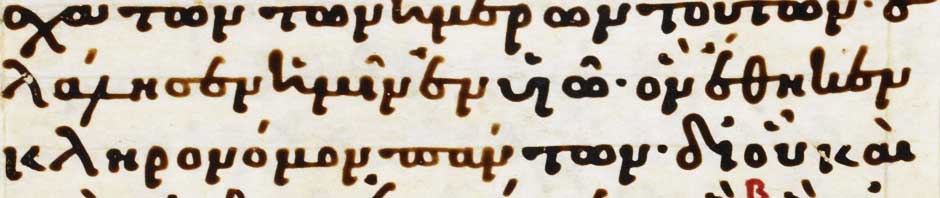
Vowel contraction in Greek is a subtle but powerful feature, especially visible in verbs and their participial forms. When two vowels meet—like α + ο or ε + ε—they often merge into a single long vowel or diphthong, producing forms like ποιέων → ποιῶν or τιμάων → τιμῶν. These patterns carry over into adjectives and participles, especially those derived from contract verbs (ἀγαπῶν, δηλοῦσα, φιλοῦντες), but in nouns, contraction is mostly lexicalized by the Koine period. Recognizing these forms isn’t just grammatical—it’s interpretive. It helps trace verbal roots, clarify syntax, and navigate older Attic or poetic texts where contraction plays a more active role.… Learn Koine Greek
-
Greek Lessons
- When News Travels: The Grammar of Report and Mission
- When Memory Speaks: Learning to Compose Greek from Mark 11:21
- When a Finger Moves the World: The Grammar of Arrival Hidden in an Exorcism
- Vindicated at the Table: How Speech Condemns and Grammar Acquits
- Carried, Not Carrying: The Grammar That Topples Boasting
-
Category
